Control systems education and real-time embedded systems applications encompass a highly dynamic process where theoretical models meet physical hardware. In this process, the ability of students and researchers to quickly test complex algorithms is key to academic success.
Aiming to make engineering education and research more accessible, Acrome adds a powerful controller alternative to its classic control experiment kits such as Ball and Beam, Ball Balancing Table, 1-DoF Copter, and Linear Pendulum: the Papaya VL board from Shanon Technologies.
This exciting integration makes it possible to experience complex control theories directly on the hardware, in real-time and with a visual programming language. The complex coding processes of traditional microcontroller programming are left behind, allowing engineering students and academics to focus directly on design and control performance.
1. Direct Connection and Rich Hardware Infrastructure
Acrome's lab-type control experiment kits are highly dynamic structures requiring precise feedback loops and instantaneous control inputs. Shanon's Papaya VL (Real-Time DSP & Control Co-Design Board) can be easily and directly connected to Acrome experiment kits thanks to its rich feature set.
Thanks to the +/- 10 analog inputs/outputs (I/O), multiple PWM interfaces, sensor connection points, and integrated power interface for motor control applications, motors and sensors in Acrome experimental kits can be driven and read directly. The elimination of the need for an additional converter or complex connection boards reduces setup times to seconds in a lab environment and minimizes the possibility of errors.
2. Drag-and-drop ease with Papaya Studio, a DLP (Drawing-Like Programming) Software
Developing traditional real-time digital signal processing (DSP) and control systems is a long and arduous process requiring deep embedded software expertise. Hand-written code is often unreadable, bloated, and unsuitable for debugging. Papaya VL, offered by Shanon Technologies, radically changes this paradigm with its DLP (Drawing-Like Programming) visual design software called Papaya Studio.
In Papaya Studio, users can create block diagrams of control systems using drag-and-drop via the DLP interface. These block diagrams are compiled in a clean, modular, and completely open-source format that directly reflects the designed theoretical model and can be loaded directly onto the board in real-time (Real-Time Native Execution). This completely closes the gap between the simulation phase and the real-world application.
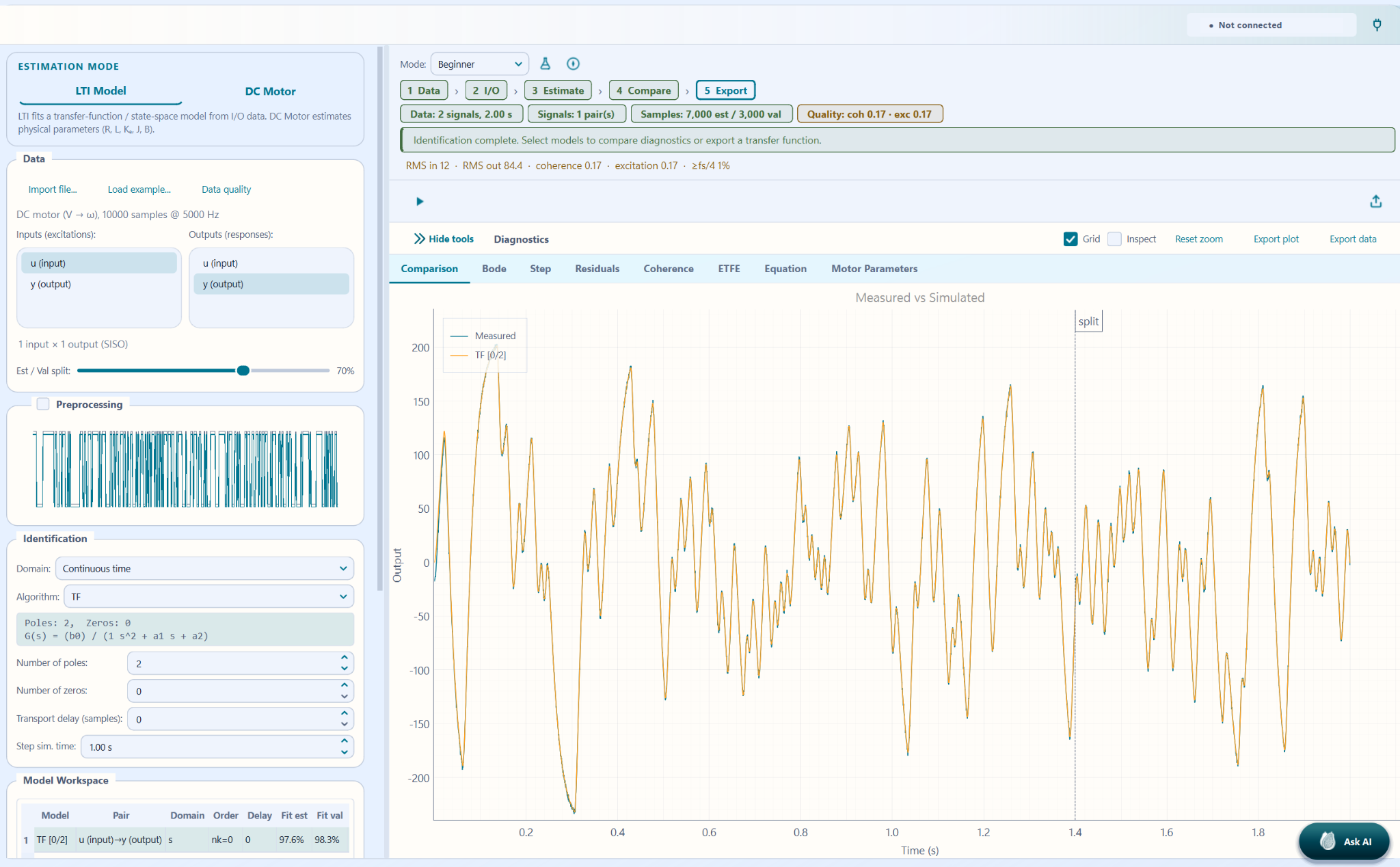
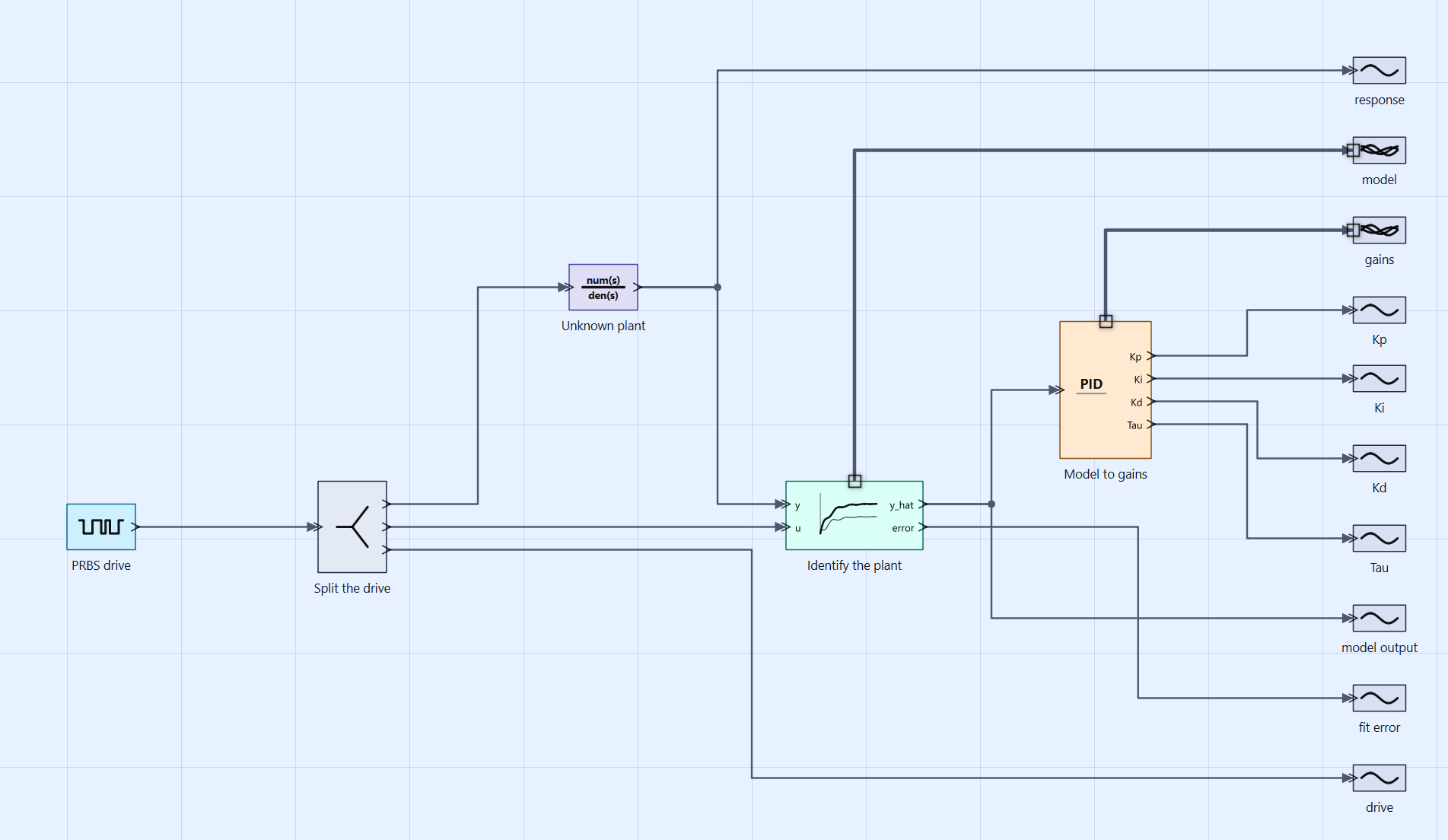
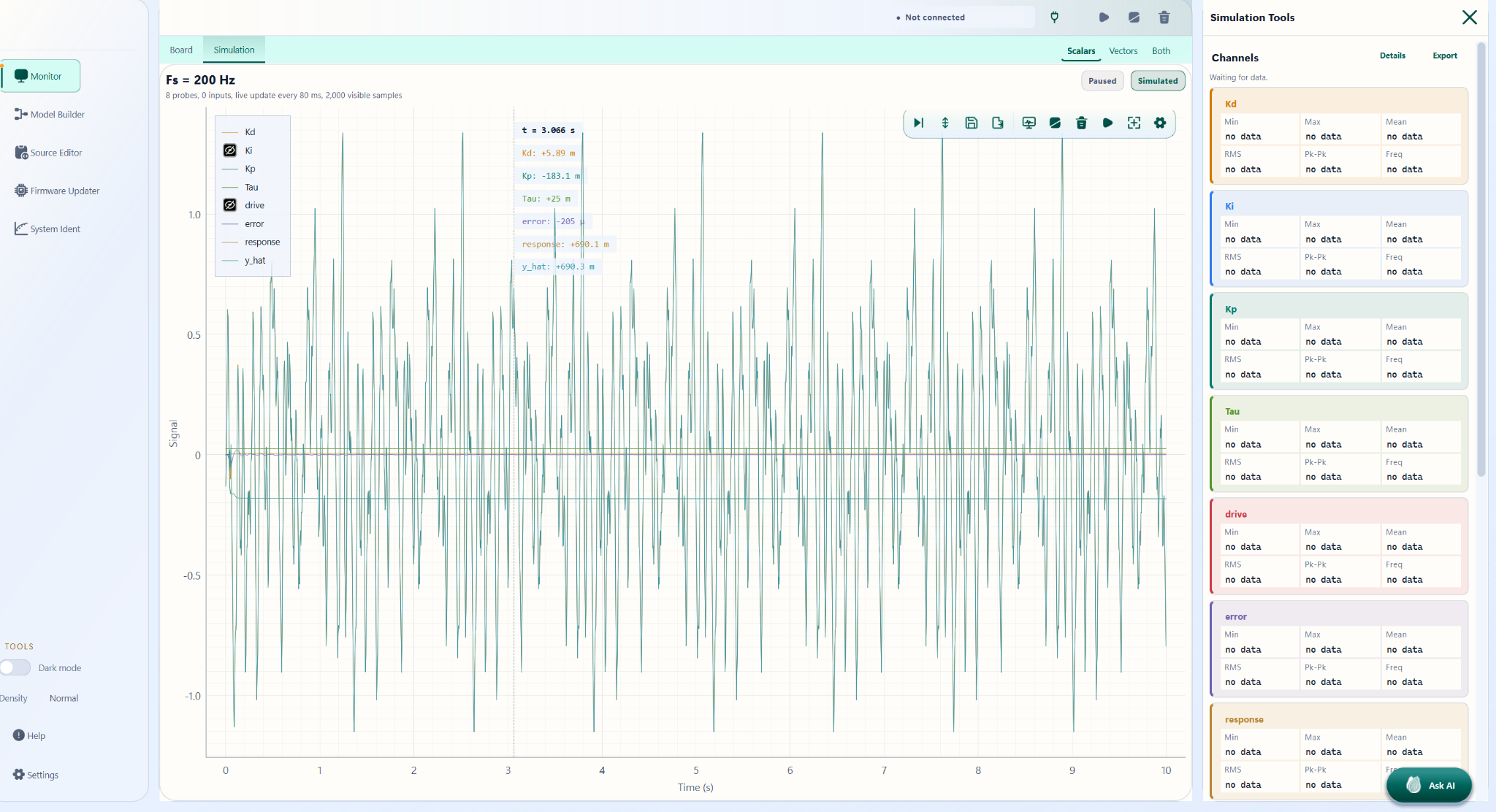
Acrome provides examples for the Shanon’s Papaya Studio software. This enables users to conduct complete, out-of-the-box experiments, thereby leveraging the combined capabilities of both DSP and MCU technologies.
Push Algorithms Beyond Limits with C and Python Code
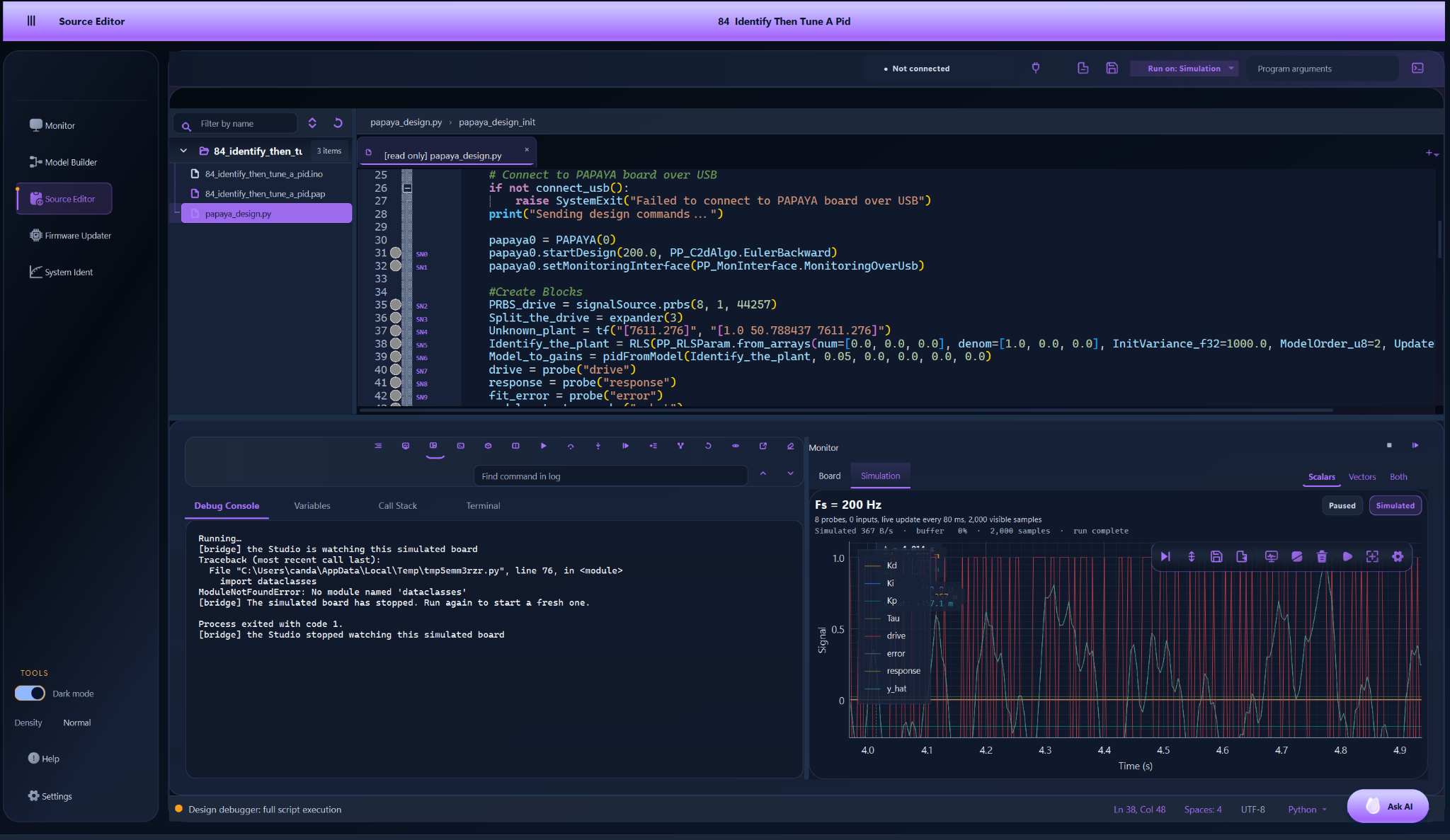
Papaya VL and DLP software architecture is completely programming language and IDE agnostic. It opens up a great opportunity for users who want to run more advanced or custom algorithms without sacrificing the speed and simplicity offered by visual block diagrams: C or Python code can be directly integrated into block diagrams.
The Source Editor pane (with a quick to switch Light and Dark mode) comes with a full set of source code debugging tools as well as a copy of the monitor tab, which gives a priceless experience especially when working with tuning the control algorithms on target or with the simulation.
3. Powerful STM Hardware and Advanced Robotic Control Applications
At the heart of the Papaya VL board is the 32-bit Arm Cortex-M based STM32 microcontroller family, proven in both industry and academia. The board takes full advantage of STM's on-chip hardware DSP (Digital Signal Processing) blocks and rich I/O capabilities. Microcontrollers based on the Cortex-M4 rely on built-in advanced DSP hardware accelerators to process signals using mathematical calculations. Thanks to Digital Signal Processing, fewer cycles are required to run control-loop algorithms, therefore contributing to the performance and the power efficiency of the application.
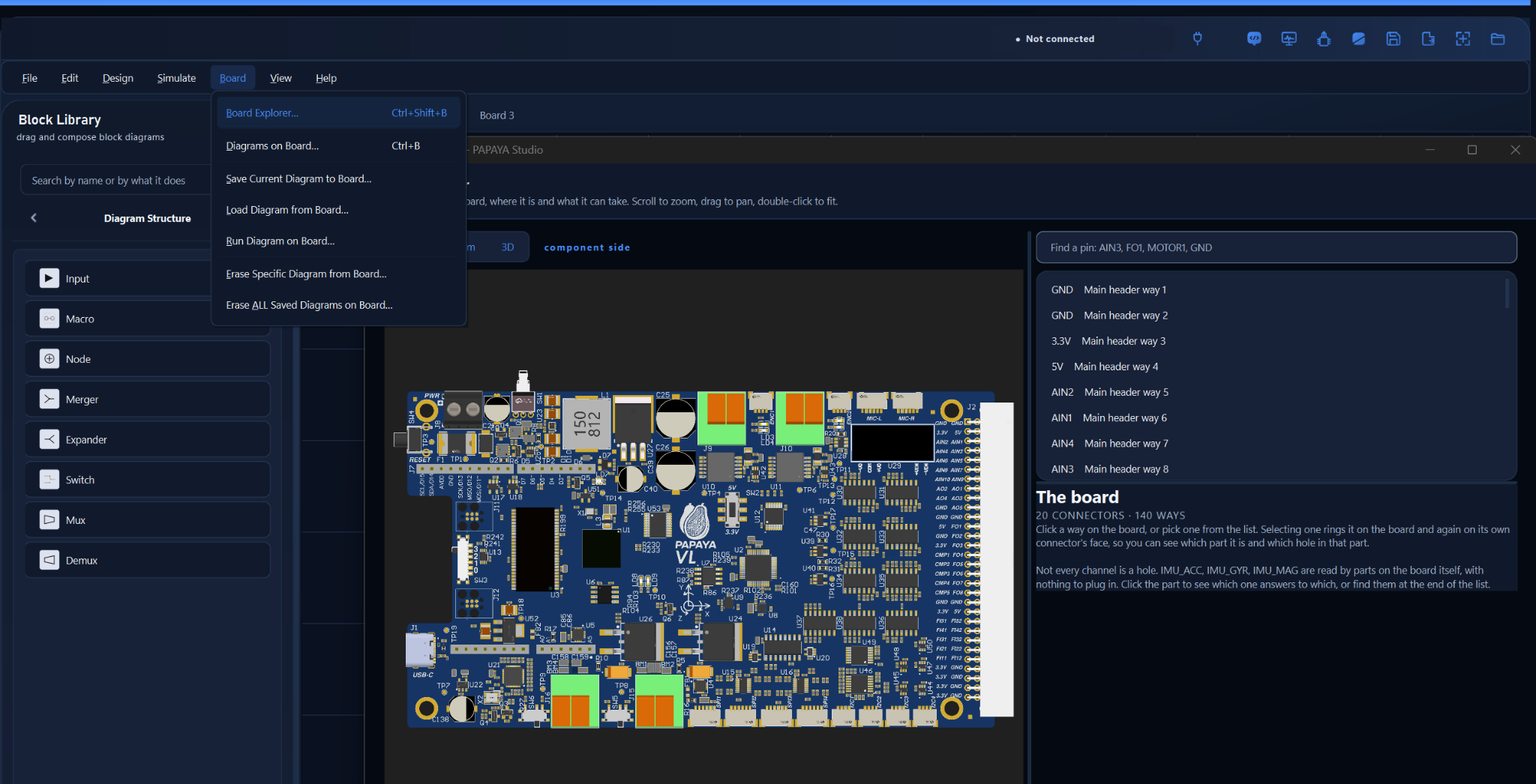
Users can connect the Papaya VL board via its onboard USB port and can use their preferred programming languages and development environments (IDEs). This allows for the combination of high-performance C programming language or rich library support (data analysis, artificial intelligence, etc.) like Python, providing researchers and advanced students with unlimited control flexibility.
The DSP hardware accelerator can process any analog signal, such as the output signal of a microphone, the feedback from a sensor embedded in a motor control system, or outputs from sensor-fusion applications. The flexibility and scalability of the architecture of the Cortex-M4 also allow users to run most of the recent Machine Learning algorithms.
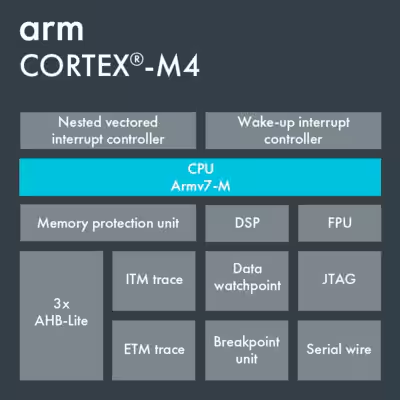
In systems requiring fast response and high stability, such as Acrome Ball Balancing Tables, 1-DoF Copters, or Linear Pendulums, hardware-based DSP units enable high-frequency control loops, noise filtering algorithms, and real-time trajectory planning to be performed within milliseconds. This hardware architecture, which can also be supported by powerful tools like STM's CubeIDE, brings advanced robotic control applications to your laboratory.
Conclusion: A New Era in Control Laboratories
Acrome's control experiment kits, designed to combine academic achievement and practical experience, and Shannon's innovative Papaya VL board are taking engineering education to a whole new level. Students who want to escape the complexities of coding and focus directly on control theory can optimize systems by live-tuning them; academics, on the other hand, can quickly implement advanced research projects with rich I/O and C/Python support. This integration is now the quickest way to transform theory into practice when training the engineers of the future.
References and Useful Resources
- Shanon Technologies - Advanced DSP Development Solutions & PAPAYA VL Board (www.shanon-technologies.com)
- Acrome Robotics - PID Controller Design with STM32 Microcontrollers (https://acrome.net/post/pid-controller-design-for-stm32-microcontrollers)
- Papaya VL and Papaya Studio Documentation (https://www.shanon-technologies.com/docs)
Author


